About Guess Who's Coming to Dinner
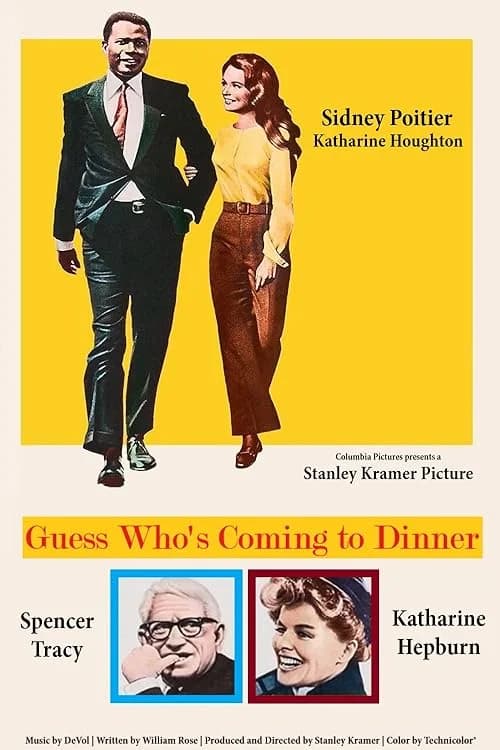
Stanley Kramer's 1967 classic 'Guess Who's Coming to Dinner' remains a landmark film in American cinema, deftly blending comedy and drama to tackle the incendiary topic of interracial marriage. The plot centers on the affluent, liberal Drayton family, whose daughter Joanna (Katharine Houghton) returns home to San Francisco with her brilliant and accomplished fiancé, Dr. John Prentice (Sidney Poitier). The ensuing dinner becomes a tense, heartfelt confrontation as Joanna's parents, Matt and Christina (Spencer Tracy and Katharine Hepburn), must reconcile their professed progressive ideals with their visceral, unexpected discomfort.
The film's power lies in its stellar performances. Spencer Tracy, in his final role, delivers a poignant and weary gravitas, while Katharine Hepburn radiates fierce, evolving compassion. Sidney Poitier embodies dignified intelligence and restraint, making the character's challenge to the family's hypocrisy all the more compelling. Stanley Kramer's direction is sharp and intimate, using the single-day timeframe to build palpable tension within the confines of the Drayton home.
Viewers should watch 'Guess Who's Coming to Dinner' not only for its historical significance as a film released mere months before the Loving v. Virginia Supreme Court decision but for its timeless exploration of generational conflict, love, and the gap between principle and practice. Its witty, intelligent script and unforgettable performances ensure it is more than a period piece; it is a moving, human story about the courage required to embrace change.
The film's power lies in its stellar performances. Spencer Tracy, in his final role, delivers a poignant and weary gravitas, while Katharine Hepburn radiates fierce, evolving compassion. Sidney Poitier embodies dignified intelligence and restraint, making the character's challenge to the family's hypocrisy all the more compelling. Stanley Kramer's direction is sharp and intimate, using the single-day timeframe to build palpable tension within the confines of the Drayton home.
Viewers should watch 'Guess Who's Coming to Dinner' not only for its historical significance as a film released mere months before the Loving v. Virginia Supreme Court decision but for its timeless exploration of generational conflict, love, and the gap between principle and practice. Its witty, intelligent script and unforgettable performances ensure it is more than a period piece; it is a moving, human story about the courage required to embrace change.